maanantai 7. lokakuuta 2013


Moritz Albrecht: Thoughts about the place of social theory focused science in society, or: what happens if asked to write a blog without a fixed topic!

When I decided to study Geography more than a decade ago, some of my good friends from my German high school remarked with a grin and in relation to my future after University: “welcome to the unemployment office”; they themselves choosing educational pathways related to business studies. This expression of distrust into the practicability and purposefulness of a subject for society, and I am rather sure they would have expressed a similar opinion had I chosen to study history, to my understanding arises a series of challenges not only for a department such as HiMa but also for students, researchers and scholars of Geography, History and Environmental Policy in general. Whereby at least for the latter, to the sake of our department, large parts of the public see a need and purpose, despite their lack of understanding about the sociological aspects of the subject.

While I am no expert about the scientific fields of history I will confine the reminder of this short comment towards some thoughts about the challenges for human geography, and thereby specifically to critical geography which I consider my personal scientific playground.

With time passing by I was continuously challenged by these initial comments from my friends and what they meant to my subject in a wider sense. On the one hand it pleased me to waive those aside as unqualified comments of ignorant, philistine neoliberal yuppies on the other hand I was aware that they maybe were yuppies, but not that ignorant and philistine and that such comments did not appear out of nothing but derived from wider conceptions about what geography is. I more and more came to turns that there is a certain problem with what ideas and perceptions our subject is connected to, particularly in the public realm! I see it embedded in a struggle for what is deemed to be of purpose and practicable for our society; and honestly speaking, human geography concurrently isn’t ranked too high.

Now it can be argued: but we have very applied methods such as geospatial analysis with geo-information systems (GIS), high level statistical analysis and methodology which creates valuable models to map and measure society and trains students towards valued and prosperous job opportunities. True that, and sadly speaking that has been probably a reason to keep the paint on the walls of the frumpy geography mansion (yes I do believe it’s not only a normal house). I should point out that by saying sadly, I by no means want to discredit the vast and valuable possibilities which lay within these approaches, but my personal feeling that geography seems to become reduced to such approaches.

In my work as a researcher I feel this transition specifically in several ways and I’m amazed by certain parallels to the “spatial turn” in the 1960’s, as had been highlighted by geographer Neil Smith. First, application calls and meetings by big funding bodies are often like a slap in the face for the humanities and social theoretic work. There is a big talk of multidisciplinary approaches and everyone is ought to be included but when reading the calls, if on national level or EU level a clear economic and quantifiable approach is favored. Demand for qualitative social sciences or humanities? Yes, if it creates a company or business/policy model! Thanks for the information! Second, talking to other (self-acclaimed “natural”) scientists or practitioners, the purpose of such qualitative, theory developing studies is often questioned or even considered a waste of time and money.

So what kind of point do I try to establish with this blog, except whining around how bad everything is and that no one, specifically outside of social scientific academia itself, respects my or our scientific endeavor? Actually I’m not that sure about that myself. I guess to a large degree we might pick at our own nose because, shouldn’t we know how governance processes are reproduced? Qualitative social scientists such as most critical geographers study and unfold complex relations of knowledge production and distribution, unravel how by such means decisions are framed and spatialities reworked and thereby forward an understanding of the complexities of society. So we should also know how to influence, by which means and through which governmental technologies, the various actors in society now deemed responsible for our claimed demise. But still, quantitative, natural “fact” driven approaches seem on the rise again and prone to remediate the gains achieved within the so called cultural turn. To express it in an exaggerated fashion, is it because “fact” driven, straight forward applicable solutions suit better to mobilize the masses? Probably yes! But I also see it in something what has been termed “simulative democracy” (Blühdorn 2013). Thus, political means to formulate or accept a problem, for instance climate change, and by providing technological innovations, policy aims (number based, e.g. 202020 target of EU renewable energy) and widely agreed pathways (change to sustainable production based on their definitions) to solve the problem without actively opening up and challenging the current system (need to grow, energy intensive society,…) itself. To some degree I see this to lead to a growing lack of interest in the philosophical understanding of our society. One of humanities and social sciences most enriching strengths to my opinion!

But, before I loose myself in these complexities I try to come back where I started. How do we might accept and eventually tackle such challenges, if at all? Should we get more involved, maybe change to become more applied? Should we use our knowledge about societal processes to actively influence society or lobby funding bodies? That’s at least not my understanding of the tasks of a social scientist. Or can we afford to wait until time heals all our wounds and we will be fashionable again, since everyone knows that tastes are changing! I don’t have a straightforward answer to these question myself which makes these a constant challenge for my subject, for my personal career choices but to my understanding also for our students which dare to choose such subjects as their destiny. Which, despite the mentioned aspects, I see as a very challenging and highly personal rewarding (not monetary) choice. Further, while colleagues involved in GIS might feel less affected by these trends we must remind ourselves that we still live in the same house (or mansion) and would do better to join forces than to get lost in turf quarrels. This similarly accounts for our neighboring subjects (e.g. within HiMa, the University), if only from a student’s perspective to increase hers or his intellectual understanding, or from a departmental perspective like HiMa and its staff. As we social scientists should know best, no one owns power nor has a monopoly for the truth so shouldn’t it be in everyone’s interest to combine all the” truth” and scientific power we can generate to make our voice heard instead to argue in a rather childish fashion about the superiority and length of our methodological tools and approaches. You may answer this question yourselves.

As to my understanding, and this is an aspect I like to remind our students off (I’m not sure if I have been too good in actually doing so!), an integrated geography while necessarily applied and rather quantitative in some aspects, requires a strong philosophical substance if we want to remain open to address real challenges confronting our society in the long run. Else, we can just distribute some geographical skills and methodology to keep the current simulation running which, and we should know better also from our partners in history, is often to sustain the unsustainability of society (e.g. Blühdorn 2013). To make ends meet, and to return to my introductory example about the unemployment office. If you are afraid of this, I might recommend studying engineering or the more applied side of our subject (e.g. GIS), but if you’re really interested in the complex processes and social understanding of our space and society, don’t be afraid and join the ride. I certainly do enjoy it without regret that I made the decision 10 years ago and in my consequent move towards a social theory focused geography later on. I’m also positive that there will always be a need for philosophical based theorizing in geography and society aside ups and downs in funding calls specifically if combined with new geographical technologies. But let’s see who, at the end of my University time has the last laugh, I, or my friends, or maybe we laugh all together in the unemployment office after another economical or environmental crisis!


Sources:

Blühdorn, I. (2013). The governance of unsustainability: ecology and democracy after the post-democratic turn. Environmental Politics, 22(1): 16-36.

maanantai 9. syyskuuta 2013

Eliisa Lotsari: Flooding in Finland


During last few years, it has been reported great floods in Finland and elsewhere in the world. For example in 2012 autumn, heavy and prolonged rains caused flooding in Finland, and in 2013 there were widespread floods in Europe due to the rainy spring. In addition to the prolonged rain periods, flooding can be caused in Finland also by spring snow melt, frazil ice and ice dams, but also they may relate to exceptionally high sea water levels. Presently, Finland can be divided broadly into three main watershed areas. The coastal watersheds are rather small, and they experience rain and snow melt induced flooding. The wide lake area watersheds experience more long lasting floods and Northern rivers experience mainly spring floods due to the snow melt.

 
According to the Intergovernmental Panel on Climate Change (IPCC) the climate change may also effect on the hydrological cycle, and thus also on flooding. The climatic change has been forecast to be greater in Northern latitudes than the global average. Especially the extreme events have been forecast to intensify.

 
Lately, there has been increasing amounts of studies related to the climate change and its effects on flooding on global, regional and national scale. In my PhD entitled “Fluvial processes and their future magnitudes: combined field observation and simulation approaches”, it was shown that due to the climatic warming, the discharges may change greatly in Finland. However, the many hydrological scenarios had great temporal and spatial differences between river reaches. Particularly great seasonal changes are to be expected, since discharges may increase in autumns and winters. Also the importance of the spring flooding as the channel modifying event is expected to diminish from the present.

 
The great discharge events, for example the once having a 100 year recurrence interval, are forecast to diminish on average by the end of the 21st century. Particularly diminishing flood events are expected in Northern Finland. On the other hand, the great discharges are expected to increase in the lake area and their outlet rivers. One of these areas is Kokemäenjoki River at Pori city area, which is already presently one of the greatest flood risk areas in Finland. However, on average, the spring discharge peaks are forecast to diminish. Important is that the autumn and winter discharges may increase in Northern Finland, in the coastal area, and in the lake area. In addition, the spring snow-melt discharge peak is forecast to occur two-three weeks earlier in the end of the 21st century than presently. Even though the flood inundation extent can be forecast to have same direction in the change as the discharges, the change in flooding extent is not linear to the discharge changes due to the local, particularly topographical, effects. In addition, the sea level and its changes may locally have greater effect on flood inundation than the changes in discharges.

 
According to the EU’s Floods Directive (2007/60/EC), also the climate change impacts are to be taken into account in flood risk assessments. The 21 greatest flood risk areas have been defined for Finland already in the end of 2011 by The Ministry of Agriculture and Forestry. The city of Pori has been defined as the greatest flood hazard and risk site, since there is a great amount of population living in the flood risk area. The flood hazard and risk maps will be created from these areas by the end of 2013 and the flood risk management plans are to be made by the end of 2015. However, despite the already great amount of studies related to flooding, further research on these issues is still needed on global, regional and local scale along with continuously enhancing future hydrological and flood simulation approaches.


References:

Lotsari, E. 2012. Fluvial processes and their future magnitudes: combined field observation and simulation approaches. Doctoral thesis (article-based). Department of Geography and Geology; Geography Division. Annales Universitatis Turkuensis A II 270.

 
Ministry of the Environment. http://www.ymparisto.fi/default.asp?contentid=1712&lan=fi


Veijalainen, N., Lotsari, E., Alho, P., Vehviläinen, B. and Käyhkö, J. 2010: National scale assessment of climate change impacts on flooding in Finland. Journal of Hydrology 391: 333–350.

keskiviikko 15. toukokuuta 2013


Historian opiskelijat suomalais-venäläisessä opiskelijakonferenssissa Petroskoissa 22.-24.4.2013

 Huhtikuisen maanantaiaamun pilvisestä säästä huolimatta viiden opiskelijan ja yhden professorin muodostama konferenssijoukko pääsi lähtemään aikataulussa Joensuusta kohti Petroskoita. Pikkubussin kyytiin hyppäsivät historian pääaineopiskelijat Timo Haapasalo, Noora Kytöharju, Miika Raudaskoski ja Leonid Yakovlev sekä venäjän kielen ja kulttuurin opiskelija Miia Eerikäinen. Kuljettajana matkalla Petroskoihin ja takaisin toimi professori Jukka Korpela. Matkan tarkoituksena oli osallistuminen Petroskoin yliopistossa järjestettävään historian konferenssiin, jossa jo useana vuonna aiemmin on ollut edustusta historia- ja maantieteiden laitokselta. Matka rajalle sujui kommelluksitta, eikä rajan ylitys Värtsilässä tuottanut matkalaisille suurempia vaikeuksia.  Ensimmäinen pysähdys oli heti rajan jälkeen Kolmas-nimisessä baarissa, josta matkalaiset ostivat evästä pitkälle matkalle halki Karjalan korpimaiden. Karamellit, pähkinät, sipsit, auringonkukansiemenet ja virvoitusjuomat tekivät kauppansa.

Venäjän puolella maisemat olivat alkumatkalla varsin tutunnäköisiä, mutta rakennusten ja paikoin myös teiden kunto muistuttivat siitä, että raja oli ylitetty. Aurinko paistoi ja lämmin kevätsää helli muutamia taukoja pitäneitä matkalaisia. Liikennettä ei pienemmillä teillä ja Laatokan rantamilla juurikaan ollut. Liikennekulttuurin fatalistisuus tuli silti matkalaisille tutuiksi, mutta onneksi lähemmän tuttavuuden tekeminen vastaantulleen rekka-auton kanssa jäi vain läheltä-piti-tilanteeksi. Pietari-Murmansk-tie ei kunnossaan suomalaisille teille juurikaan hävinnyt, joten matka sujui hyvin sutjakkaasti. Olimme Petroskoissa hyvissä ajoin ennen sovittua saapumisaikaa ja ennätimme tehdä jo pikaista tuttavuutta kaupunkiin. Nälkäiset ja janoiset matkalaiset ravitsi Kivats-niminen kuppila, jonka herkulliset hampurilaiset ja edulliset hinnat jäivät mieleen. Ruokailun jälkeen siirryimme Petroskoin yliopistoon, jonka sokkeloisten käytävien takaa löytyi lopulta kuuma ja pieni kokoushuone, jossa tapasimme majoittajiamme sekä konferenssista vetovastuussa olleen Irina Chernyakovan. Meidät toivotettiin kahvin ja keksien kera lämpimästi tervetulleeksi Petroskoihin. Konferenssipäivän ohjelma paljastui ja meille vakuuteltiin moneen kertaan, että tiistaina on oltava ajoissa paikalla eikä ohjelmaa saa missään nimessä hävittää. Tervetulotoivotusten jäimme tulevien isäntäperheidemme huomaan.
 
Kuka lähti pidemmällekin matkalle kaupungin syrjäiselle laidalle isäntäperheen luo Ladan takapenkille ahtautuen, kuka käveli vartissa kilometrin päässä yliopistolta sijaitsevaan majoitukseen. Täytyy sanoa että isäntämme, opiston historianopiskelijat, olivat innostuneita tulostamme ja yrittivät palauttaa mieliin melko hyvää, mutta käytön vähyyden takia unohtuneen englannin. Eräskin opiskeli suomen ja englannin aikeita, mutta molempien osapuolten sopimuksesta päädyttiin sujuvaan venäjään.

Osa isäntäperheistä päätyi sellaisiksi sattuman kautta, kun sattui samaan aikaan samalle käytävälle Chernyakovan kanssa. Vieraiden tulosta oltiin kuitenkin iloisia ja vieraanvaraisia, vaikka itse kullakin oli omia opintojaan suoritettavana. Kotiruokapäivällinen oli maittava ja keskustelu oli vilkasta ja koski Suomen ja Venäjän arkea koskevia eroavaisuuksia. Suomesta osattiin heti nostaa esille talvisesongin turistirysät, kuten Lappi ja Korvatunturi, shoppailureissut Joensuuhun sekä Suomen puhtaus. Tasapuolisuuden nimissä on kuitenkin sanottava, että Petroskoi avautui meille todella siistinä ja puhdistettuna kaupunkina. Lumet ehtivät jo kokonaisuudessaan sulaa ja sen alta joka kevät paljastuvat hiekka, lika ja roskat oli siivottu pois. Lähtiessään matkalle meitä varoitettiin että isäntäperheen ruokailussa ei sovi syödä lautasta tyhjäksi, sillä silloin uutta annosta ladottaisiin lautaselle. Tämä ja monet muutkin stereotypiat eivät toteutuneet. Karhuja ei kävellyt vastaan kaduilla, miliisi-poliisit ja taskuvarkaat eivät tapelleet keskenään yrittäen päästä lompakkotaskullesi, eikä ruoka ollut huonoa.

Saatuaan syötyä ja levättyä kukin opiskelijarypäs lähti isäntiensä johdolla kaupungille katselemaan nähtävyyksiä, katsastamaan Otto Wille Kuusisen patsasta, sekä kauppahalliin emaliämpäriostoksille. Vaikka Petroskoi on noin 300 000 asukkaan maakuntakeskus ja se on levinnyt yli 15 kilometrin pituudelle Laatokan rannalle, pystyi illan aikana kiertämään keskustan ykköspaikat jalan. Silmiin osui heti hyvin säilynyt pittoreski puutalokanta, jollainen olisi Joensuussa jo kokenut hävityksen 70-luvun betonilaatikkokehityksen tieltä. Entisöintyinä parikerroksiset koristeelliset puutalot palvelivat hyvin tarkoituksensa. Toki kaupunkikuvasta pystyi näkemään historian vaikutukset rakennuskantaan ja -tyyliin. Teatterit ja liikenneasemat edustivat neuvostoklassismia, asuinkorttelit olivat Hrustshovin tehorakentamisen peruja, hotellit Suomestakin tuttua uusfunkkista. Jokainen sai illan päätteeksi haluamaansa ruokaa, sillä kaupungista löytyi niin suhsiravintolaa kuin venäläisiä kansallisherkkuja tarjoavaa kohtuuhintaista paikkaa.
 

Konferenssipäivän aamuna tiistaina yliopiston sokkeloiset käytävät asettivat meille ensimmäisen haasteen, kun suunnistimme kohti avajaistilaisuutta. Selvisimme haasteesta kuitenkin kunnialla ja saavuimme paikalle hyvissä ajoin. Kukaan ei ollut unohtanut tai hukannut ohjelmaa, joten virittäytyminen päivän haasteisiin saattoi alkaa. Kun avajaispuheet oli pidetty, siirryimme seminaarihuoneeseen valmistautumaan päivän urakkaan.

Olimme edellisenä iltana ehtineet tutustua ohjelmaan sen verran, että tiesimme tulossa olevan pitkän päivän. Esityksiä oli yhteensä 16, kukin kestoltaan noin 15 minuuttia. Päivä sisälsi yhden puolen tunnin ruokatauon, jolloin saattoi piipahtaa yliopiston kahvilassa tai sitten mielensä mukaan kaupungilla haukkaamassa jotain pientä. Ensin ajatus esitysten määrästä tuntui ylivoimaiselta, mutta esitysten päästyä vauhtiin, ne soljuivat omaa tahtiaan eteenpäin. Noin kolmen esityksen välein pidettiin tauko, jolloin sai esittää kysymyksiä edellisistä esitelmistä. Kuunteleminen oli ajoittain haastavaa, sillä vain osa meistä ymmärsi venäjää. Venäläiset opiskelijat olivat tehneet kuitenkin englanninkieliset Powerpoint -esitykset, joten myös kieltä ymmärtämättömänä saattoi joten kuten pysyä vauhdissa mukana. Osa meistä piti esitelmänsä englanniksi, osa venäjäksi. Selvisimme urakasta kunnialla ja taas yhtä kokemusta rikkaampana.
Pääsimme myös mukaan arvostelemaan esityksiä. Jokaiselle osanottajalle jaettiin paperi, jossa arvioitiin numeroin (1-5) esitysten eri osa-alueita. Lopuksi pisteet laskettiin yhteen ja päivän kolme parasta julkistettiin. Voiton vei Miika esitelmällään kaivospolitiikasta ja Otamäen kaivoksen perustamisesta, toiseksi sijoittui Timo, joka puhui venäläisistä Suomen kiinteistömarkkinoilla ja kolmanneksi Sergei Kutakov Tverin yliopistosta.

Vaikka päivä oli loppusaltaan suhteellisen uuvuttava, itse kullakin oli päivän päätteeksi havaittavissa pientä hymyn karetta kasvoilla. Pitkän ja antoisan päivän päätteeksi totesimme porukalla, että nyt konferenssi on osaltamme ohi. Hyvin meni, mutta antaa mennä vaan. Otettuamme yhteiskuvan yliopiston edessä, olivat suunnitelmat varsin selvät - nyt johonkin hyvään ravintolaan syömään ja virkistäytymään. Taktiikkapalaverit saatiin nopeasti päätökseen, ja varsin nopeasti löysimmekin itsemme kävelemästä hostiemme perässä yliopistolta kohti syrjäisempiä katuja, nälän ja janon vauhdittaessa askeltemme kulkua. Lopulta saavuimme syrjäisen oloisen ravintolan alakertaan, siirryimme hissillä ylös, ja edessämme avautui siisti ja tyylikäs ravintola kaikkine herkkuineen.

Ruokalistat olivat houkuttelevat, eikä aikaakaan kun saimme tilaukset vetämään. Ennakkoluulottomina ja kokeneina ulkomaanmatkailijoina tilasimme paikallisia herkkuja, kuten erilaisia pizzoja - rohkeimpien tilatessa borssia. Ruokia odotellessa olikin aikaa purkaa tuntoja päivään ja koko siihenastiseen matkaan liittyen. Ennen reissua pohditut jännityksen aiheet oltiin selätetty kunnialla, matka oli sujunut täysin ongelmitta ja pitkä konferenssipäiväkin oli saatettu päätökseen. Ravintolaillan kruunasivat maittavat ateriat hyvin edullisine hintoineen. Kenties yksi suurimpia kysymyksiä pöydän ääressä oli se, miksei meiltä saa näin hyvää ruokaa tällaiseen hintaan. Venäläinen ruokatarjonta ei ollut matkan aikana pettänyt kertaakaan, eikä tämänkään ravintolan tarjonta tehnyt poikkeusta asiaan.
Kun erinäisten vaiheiden kautta kaikki ryhmäläisemme olivat saaneet lopulta syödäkseen ja juodakseen, oli jatkosuunnitelmien aika. Ystävälliset hostimme tarjosivat erilaisia vaihtoehtoja illan viettämiseen, paikallisesta disko-infernosta kotijatkoihin. Päädyimme suuntaamaan kukin omien hostiemme tykö viettämään loppuiltaa omalla pienellä porukalla. Tämä ilta oli ehkä se kaikkein odotetuin, kun pitkä työpäivä oli takana ja edessä oli mahdollisuus rentoutumiselle ja virkistäytymiselle. Seuraavan päivän lähtö tuntui jossain vaiheessa iltaa hyvinkin kaukaiselta ajatukselta ja mieleen hiipi kysymys siitä, miksei tänne voisi jäädä vielä vähäksi aikaa oleilemaan ja tutustumaan Petroskoihin sekä venäläiseen elämänmenoon paremminkin. Loppuillan kruunasi slaavilainen vieraanvaraisuus; saimme nauttiaksemme erilaisista syötävistä ja juotavista, sekä ennen kaikkea mukavasta yhdessä olemisesta. Kielimuurin viimeistenkin rippeiden murtuessa illan mittaan oli helppo todeta itselleen päivän päätteeksi, että kyllä matkailu avartaa, monessa suhteessa. Toisaalta illan tullessa loppuaan kohden, mieleen hiipi myös kysymys siitä, että moneltako seuraavan aamun herätys koittaakaan?

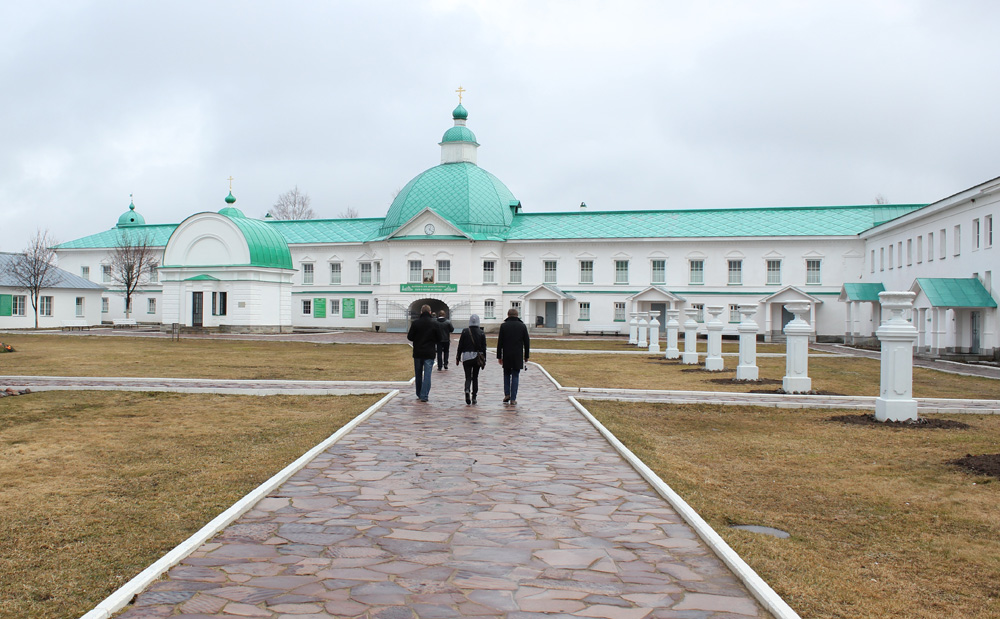
Aamu, jolloin oli aika lähteä takaisin Joensuuhun, tulikin sitten melkein liian nopeasti. Ennen kuin lähdimme, pysähdyimme vielä keskustassa olevassa uudessa Sigma-supermarketissa, josta ostimme roppakaupalla matkaevästä ja tuliaisia. Paluumatkalla mentiin eri reittiä kuin tullessa ja vierailimme Aleksanteri Syväriläisen luostarissa, jossa satuimme myös näkemään hieman meneillään olevaa jumalanpalvelusta.


Luostarikäynnin jälkeen poikkesimme Aunuksessa ostamassa vielä vähän lisää ruokaa. Ajoimme Laatokan rantaa kulkevaa mutkittelevaa tietä pitkin kohti Sortavalaa ja katselimme samalla maisemia. Pitkärannassa pysähdyimme tien varressa olleeseen kuppilaan piristävälle kahvitauolle. Loppumatkan kiinnostavin kohta oli pikainen kierros Sortavalan keskustassa. Sortavalan jälkeen tulimme nopeasti rajalle, jossa rajanylitys sujui ilman suuria ongelmia, vaikkakin hitaammin kuin menomatkalla. Matkan lopulla tunnelmat olivat tyytyväiset ja Petroskoin konferenssimatka oli kaiken kaikkiaan mielenkiintoinen ja mukava tutustumisretki itänaapuriin ja se toi paljon uusia kokemuksia osallistujille.